

System choice without a house favorite
Four shop systems in house, none of them a default answer. Your product range decides what fits.
What you get
Four shop systems in house, none of them a default answer. Your product range decides what fits.
Product cards, filters and checkout cut to fit your goods. No template you'd recognize from three other shops.
Categories, attributes, variants. The structure decides whether customers find what they're looking for.
Stock, prices and orders end up where they belong, without anyone retyping them.
Abandoned carts, searches without results, return rate. Measure, sharpen, repeat.
Tell us briefly what you have in mind, and we will turn up with a good plan.
Four shop systems, one recommendation
Most agencies build in exactly one shop system and therefore always recommend the same one. We work with four and decide by what you sell, to whom, and where the order goes after that. That decision comes before the design, because it determines almost everything that follows.
Our recommendation when business customers buy: customer groups with their own prices, volume tiers, approvals from purchasing and quotes that grow out of the cart. Tax and legal rules for the German market come built in, invoice payment and distance-selling thresholds don't cost an extra round. Shopware is open source and runs on your own hosting, which in return needs care: updates, extensions, backups. It pays off from a product range that demands structure, and at revenues that justify your own infrastructure. For a small brand selling direct it's usually too much machine.
The right choice when a brand sells directly to end customers and wants to be live fast. Hosting, security, payment methods and updates come with it, but there's less room in the depths, and a share of revenue goes to Shopify as a fee. For Hoofprint we built a configurator on top of it that lets customers turn a photo of their horse into a design of their own. For FS Animal Health the same shop brings several brands together without any one of them disappearing. Both show how far Shopify carries when you don't treat it as a building kit.
A given wherever WordPress is already in place and the shop is part of the site rather than its center: small product ranges, manageable volumes, editorial content around them. Cheap to start with, because website and shop sit in one system. The limit comes with volume: many variants, customer groups or an ERP system call for extensions, and with every extension the upkeep grows. We recommend WooCommerce when the shop is allowed to stay small, and advise against it when it's meant to grow.
Comes into play when the ERP system sets the pace. JTL-Wawi is then the hub for stock, purchasing and shipping, the JTL-Shop the shop window in front of it, and orders run without an interface in between. That suits retailers with their own warehouse, several sales channels and staff who search by article number instead of browsing. MCM Systeme sells pipe and hose systems to private customers, tradespeople and plant engineers: three audiences with three expectations, one warehouse behind them.
How we work
30 minutes on product range, audience and volumes. After that we know which systems are in the running.
Two candidates compared against your case, the recommendation set out in writing.
Categories, attributes, variants and checkout, before anyone opens a layout.
Design, build, product data, interfaces and test orders all the way to the invoice.
Go live, look at the numbers, sharpen. The first month tells you more than any assumption before it.
Existing shop
A shop relaunch is riskier than a website relaunch, because money hangs on every address. Product pages that have ranked for years, customers with saved carts, order histories that accounting depends on. Move that without a plan and you'll see the damage in next month's revenue.
So we take stock first: which product pages bring visitors, which URLs are linked from outside, which data has to come along and which may stay behind. Out of that comes a redirect list that leads every old address to its successor, and a migration path for products, customers and orders.
Before the switch, the new shop runs under a test address, including orders with real payment methods. Only once an order runs cleanly into the ERP system and back out onto an invoice do we go live. After that we watch rankings and revenue closely, because the first four weeks show whether the sums add up.


Professional Services
Building the company website with a redesign of the logo, a clear brand identity and a well-thought-out UI and UX concept for a modern and intuitive user experience.

Retail & Wholesale
Redesign of an online shop for horse products with a focus on UX, clear product pages and a well-considered site structure for an optimal shopping experience.
Hospitality & Leisure
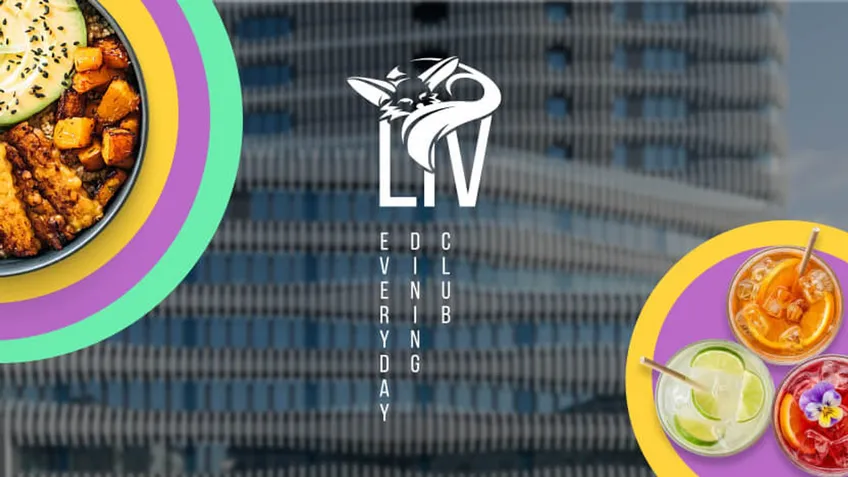
The branding for the robot restaurant on the ground floor of the RKM 740 in Düsseldorf-Heerdt covers the logo, color scheme, typography and menu.
B2B
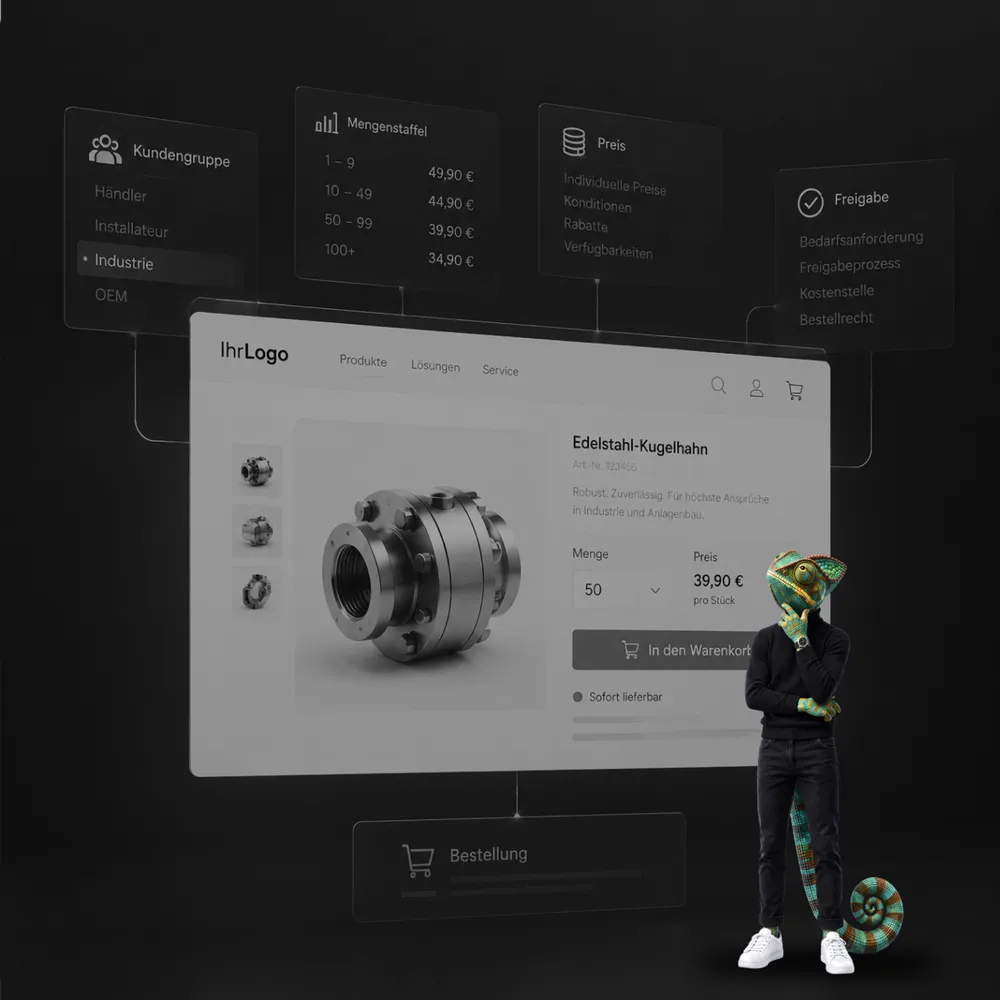
In trade with business customers the price isn't a number on the product, it's the result of customer group, quantity and agreement. On top of that come orders on invoice, approvals from purchasing, delivery addresses at several sites and staff who search by article number instead of browsing.
A shop that can do this looks unspectacular from the outside and is the actual work on the inside: price lists per customer group, volume tiers, blocked product ranges, reordering from the history, quotes that grow out of the cart. Plus a search and filters that can handle article numbers and technical attributes instead of only color and size.
These requirements usually decide between Shopware and JTL. They also decide how deep the ERP system integration reaches, and they hang more on user guidance than on visual design. How we work that guidance out is on the page about UX Design.
Budget
The price of a shop hangs less on the design than on three questions: how many products, how many variants, and what happens after the click on Buy. A product range of twenty items with direct shipping is a different project from four customer groups with their own prices and an ERP system behind them.
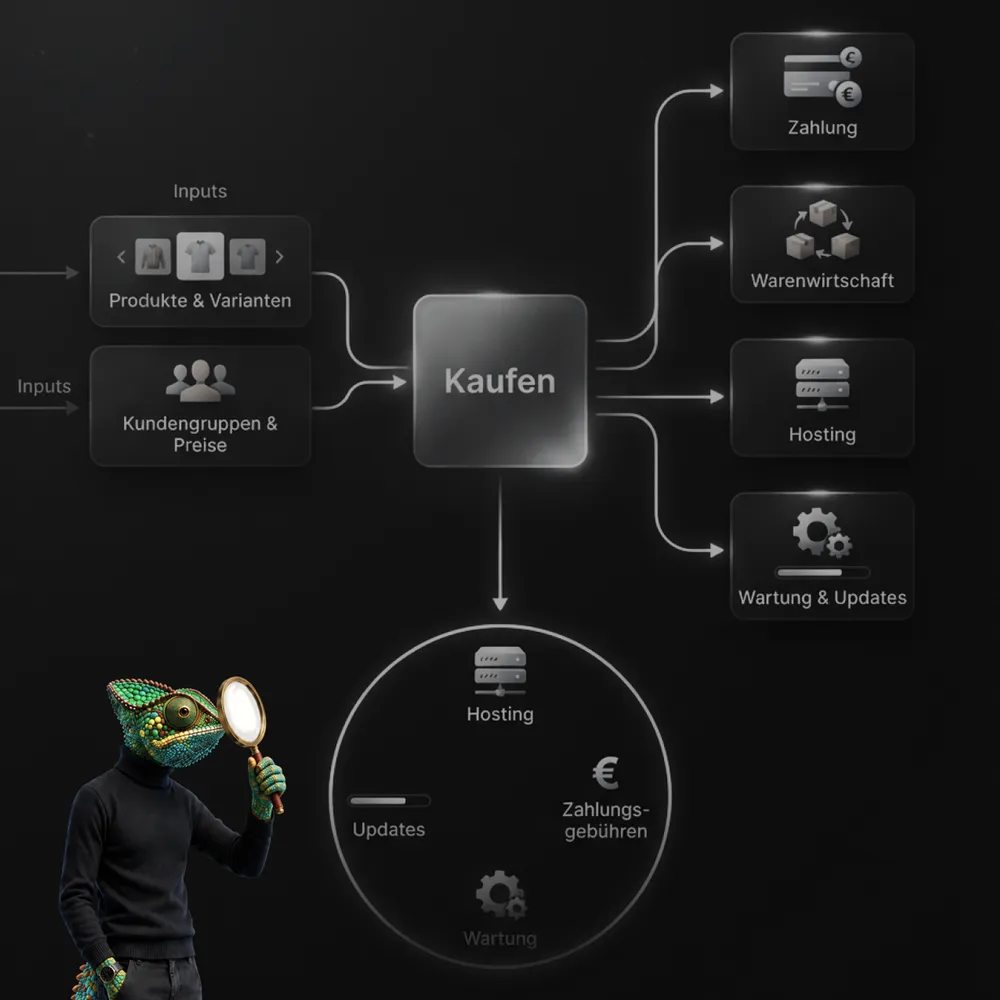
Besides the one-off build, costs keep running: license or hosting for the system, payment providers with a share of revenue, maintenance and updates. Most people underestimate that sum, because it doesn't stand out in the quote and only becomes visible in the second year. So we name it from the start.
If a new site is due alongside the shop anyway, it's worth looking at both together. What overlaps and what stays separate is on the page about web design.
Frequently asked
What a shop costs at an ecommerce agency depends on your product range, the variants and the question of what happens after the click on Buy. A Shopify shop with direct shipping is a different project from a B2B shop with customer prices and an ERP system. We name the range in the first conversation, before you invest time. At MCM Systeme private customers, tradespeople and plant builders buy in the same shop; the work was in making it adapt to each of the three groups. Shops of small and medium-sized companies may qualify for BAFA funding; the application is accompanied by COZMOO.
Both, depending on the case. Shopify is live faster and cheaper to run, as long as you sell to end customers and get along with its given workflows. Shopware pays off as soon as customer groups need their own prices, orders have to be approved or the ERP system plays a deep part. We compare both against your product range and set out the recommendation in writing.
As soon as business customers buy: customer groups with their own prices, approvals, quotes out of the cart or an ERP system that plays a deep part. Shopware runs on your own hosting and wants looking after, so it only pays off from a product range and a revenue that can carry it. For a small brand selling direct we don't recommend it.
For brands that sell directly to end customers and want to be live fast. Hosting, security and payment methods are included, and for that you pay a monthly fee and a share of revenue. If you need workflows of your own that Shopify doesn't provide for, it gets tight — we check that against your case beforehand.
If your website already runs on WordPress, the product range stays small and the shop is part of the site: yes. If the shop grows and variants, customer groups or an ERP system come along, everything hangs on extensions, and the upkeep gets more expensive than the move. We'll say so in good time.
JTL-Wawi is the ERP system: stock, purchasing, shipping, invoices. The JTL-Shop is the shop window in front of it and gets products and prices straight from the Wawi, and orders travel the same way back. If you already use the Wawi, the JTL-Shop is the shortest route to an online shop. If you don't, you still need it for the JTL-Shop.
A Shopify shop with well-kept product data stands in a few weeks, a B2B project with an interface to the ERP system takes months. The most common reason for delay is incomplete product data, not the technology. You get the schedule with the quote, including the date by which the product data has to be ready.
Yes. If the substance is sound, we rebuild instead of starting over — usually cheaper and always faster. If a move makes sense, we bring products, customers and order history along and set up a redirect for every old address, so that visibility survives the move.
Yes. With JTL-Wawi the route is short, because shop and ERP system come from one house. For other systems the connection runs through their interface or through a connector. What gets transferred we clarify in detail beforehand: stock and prices in one direction, orders and customers in the other.
Usually your team. We set the upkeep up so that it works without us, and hand it over in a training session with a recording. If you'd rather give the upkeep away, we take it on as ongoing support.