
Strategy and structure
Who should do what? That is where the site structure comes from, not from a template.
What you get
Who should do what? That is where the site structure comes from, not from a template.
No theme anyone recognizes. The site looks like you, not like a template.
Fast, accessible, on every device. A CMS you run yourself.
If the substance holds up, we rebuild instead of starting over. Redirects included, so your visibility survives the move.
Measure, sharpen, extend. A website is never finished, and that is not a flaw.
Tell us briefly what you have in mind, and we will turn up with a good plan.
Our approach
Most websites do not fail because of the design, they fail because of the structure. Say everything on one page and you say nothing. And take the structure from a template and you take on the questions of someone else's business.
So we do not start with colors, we start with a question: what should the visitor do, and what do they need to know to do it? That is where the site structure comes from. Which pages exist, in which order, with which step at the end. Only then does the design begin.
For most companies that means: fewer pages than expected, but every one with a job. A manufacturing company does not need eleven subpages about company values, it needs one that says what it makes, for whom and in what batch size. A law firm does not need an image gallery, it needs one page per practice area, because that is exactly what people search for.
Once the structure stands, the design follows, within what the brand already has. If that does not exist yet, branding is the more honest first step: a website can show a brand, but it cannot invent one.
That sounds unspectacular, and it is the reason a website brings enquiries instead of compliments. Design decides whether someone stays. Structure decides whether they act.
How we work
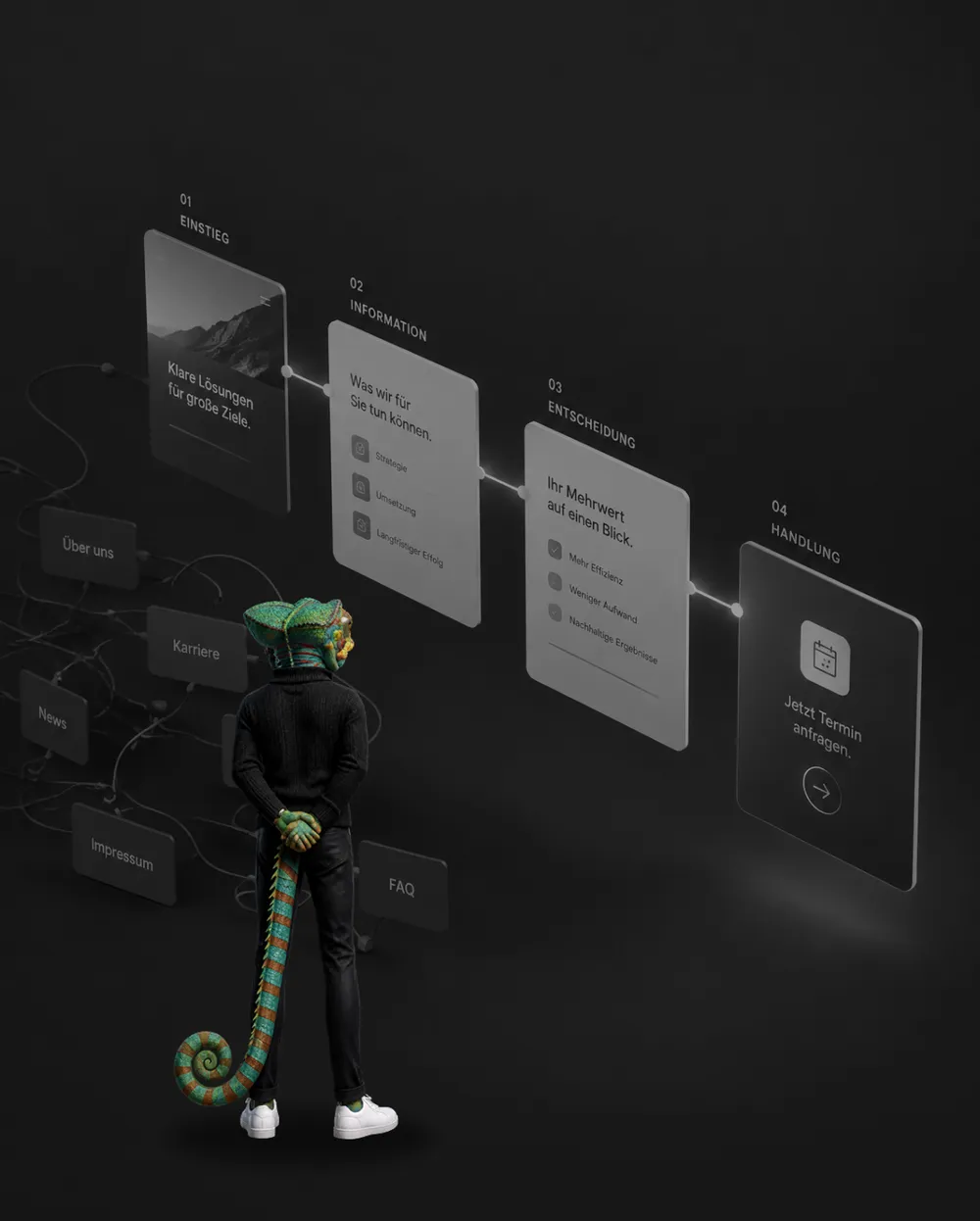
30 minutes, an honest assessment. After that you know whether it is worth it.
Page structure and content, before anyone opens a layout.
Two directions to choose from, one gets built to the end.
Build, content, tests. You can see where it stands at any time.
Go live, measure, sharpen.
Website relaunch and migration
Not every website has to be built from scratch. If content and structure hold up and only the technology is outdated, a website relaunch is faster and cheaper than a new build. And it takes the visibility built up over years with it, as long as the move is planned.
The most common mistake in a website relaunch: the new site goes live, the old URLs disappear, and the rankings go with them. The drop builds over weeks, and by then nobody traces the cause back to the move. That is why we start with an inventory from the Search Console: which URLs collect impressions, which terms the site is found for, where visitors actually land. The redirect plan comes out of that. Every old URL gets a destination before the first new page goes live. What works is carried over. What does not is replaced. What nobody needs any more disappears deliberately instead of accidentally.
Many of the websites that come to us run on WordPress and have grown over years: a plugin for every problem, slow by now, updates postponed because any one of them could break something. Posts, pages and images export cleanly, the structure we take apart critically. Whether the new site runs on WordPress again or on a lighter system is decided by who maintains it afterwards and what it has to do. Not by habit.
For many marketing teams Webflow is the right home: a simple CMS in which a new landing page appears without a developer, hosting and security included, and free enough in design terms that no template shows through. If you want to move there from WordPress or a website builder, you get the migration including redirects from us, and a site the team maintains itself afterwards. Webflow reaches its limits when a site is to become multilingual, needs custom logic or takes on a large catalog. Then we move in the other direction, without losing any URLs: our own website was a Webflow site with 111,000 impressions in sixteen months, migrated to Astro and Sanity, 182 URLs mapped one by one.
Website builders offer no export worth the name. Here we build new, but not from zero: the URLs that get found stay reachable, the copy that works moves along, and the domain only switches once the new site has been checked through. What you gain is a site that belongs to you instead of a subscription that gets more expensive with every feature.
What we build with
Most agencies build in exactly one system and therefore always recommend the same one. We work with several — as a Webflow agency, as a WordPress agency, and with Astro and Sanity — and choose by what you want to do with the site afterwards.
Where speed, accessibility and security come first, we build with Astro and Sanity: Astro delivers finished pages instead of assembling them on every request, Sanity is the editing system behind it, with preview right inside the page. No plugin that needs an update at night, no database anyone can attack. This website runs that way itself, and it is the proof that the result does not have to look like technology.
In Webflow we build sites that marketing is meant to maintain itself, without a developer for a new landing page. WordPress is set where a team already knows it or needs plugins that exist only there.
When it comes to selling, the catalog decides. Shopify, Shopware, WooCommerce or JTL: which system fits which range is on the page about E-commerce and online shops.
We also say what we do not do: TYPO3 is not one of our systems. There are agencies that do nothing else. With a system of that size, that is the better route.

Professional Services
Building the company website with a redesign of the logo, a clear brand identity and a well-thought-out UI and UX concept for a modern and intuitive user experience.

Retail & Wholesale
Redesign of an online shop for horse products with a focus on UX, clear product pages and a well-considered site structure for an optimal shopping experience.
Hospitality & Leisure
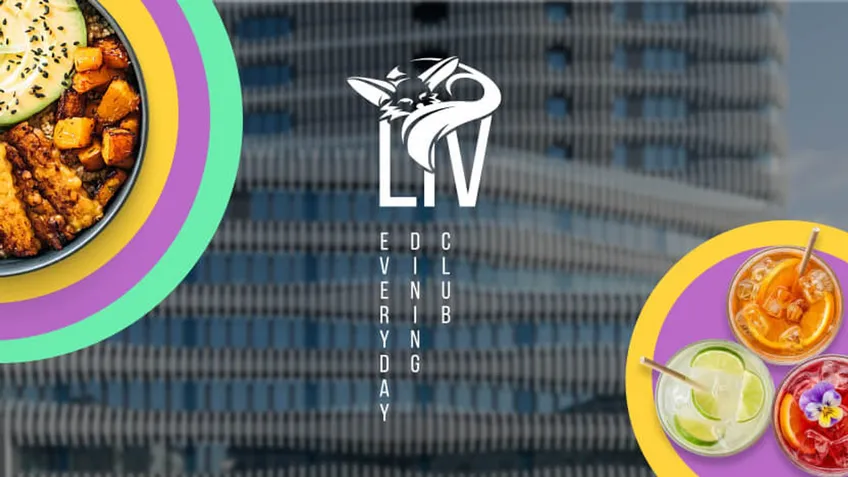
The branding for the robot restaurant on the ground floor of the RKM 740 in Düsseldorf-Heerdt covers the logo, color scheme, typography and menu.
What it costs
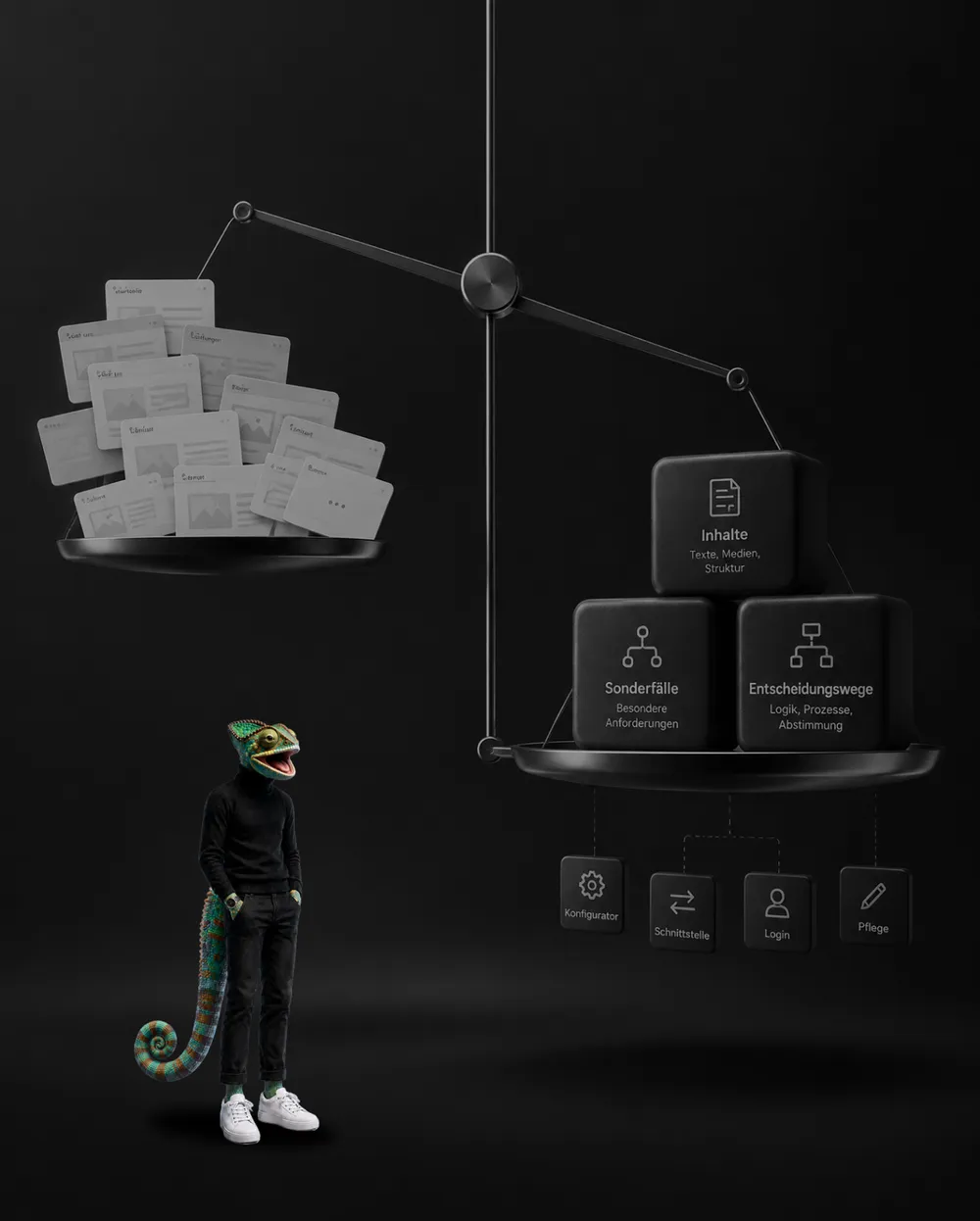
Anyone collecting quotes for a new website finds prices between five hundred and fifty thousand euros. The range is real, it just rarely has anything to do with the number of pages.
Three things drive the effort: content, special cases and decision paths. If copy and images are missing, a design project turns into an editorial project. If the site needs a configurator, a price list behind a login or an interface to the ERP system, the work is not the look, it is the logic behind it. And when five people decide together, every round costs time nobody planned for.
What barely moves the price: the number of subpages. Page eight costs a fraction of page one, because the system underneath already stands. So anyone who wants to save is saving in the wrong place by cutting pages, and in the right place by delivering content on time.
What runs afterwards is rarely named in a quote: domain and hosting come to a low double-digit amount per month, plus maintenance. We build so that you can take it on yourself. If you would rather hand it over, you get a fixed rate instead of a list of hours.
With us a focused landing page comes to around €3,500, a company website with relaunch usually between €8,000 and €20,000. Consulting, moods, SEO and GEO — visibility in Google and in AI search — are included. We are happy to clarify scope and price in a short conversation. Briefly describe what it is about, and you will get an assessment instead of a catalog price.
Frequently asked
A focused landing page at a web design agency like ours starts at around €3,500, a company website or a relaunch usually lands between €8,000 and €20,000. Consulting, moods, SEO and GEO are included. For Decadis, whose apps more than twelve million people use every day, the new website came about for the company's 18th anniversary, complete with 3D monsters from Blender. We are happy to clarify scope and price in a short conversation, before you invest time. Small and medium-sized companies may qualify for BAFA funding — whether your project is eligible and how the application works is explained by COZMOO.
6 to 8 weeks from start to live, if the content is ready in time. The most common reason for delay is missing copy and images, not the technology.
An hour for the conversation, access to whatever material exists, and one person who is allowed to decide.
If structure and content hold up, the relaunch is cheaper and faster. After a look at the existing site we tell you which of the two makes sense.
Not if the migration is planned. Before we build, we pull from the Search Console which URLs are being found, and set up a redirect to its successor for each one. Titles, descriptions and content that work move along with them. After the switch we watch the numbers for a few weeks, because a drop never comes on the first day. Our own website migrated from Webflow exactly like this, with 182 mapped URLs.
Yes. You get a CMS in which text and images can be changed without us, and an introduction to go with it.
Technically the site is clean from day one. Content optimization is a service of its own. We will tell you honestly whether it is worth it for you.