
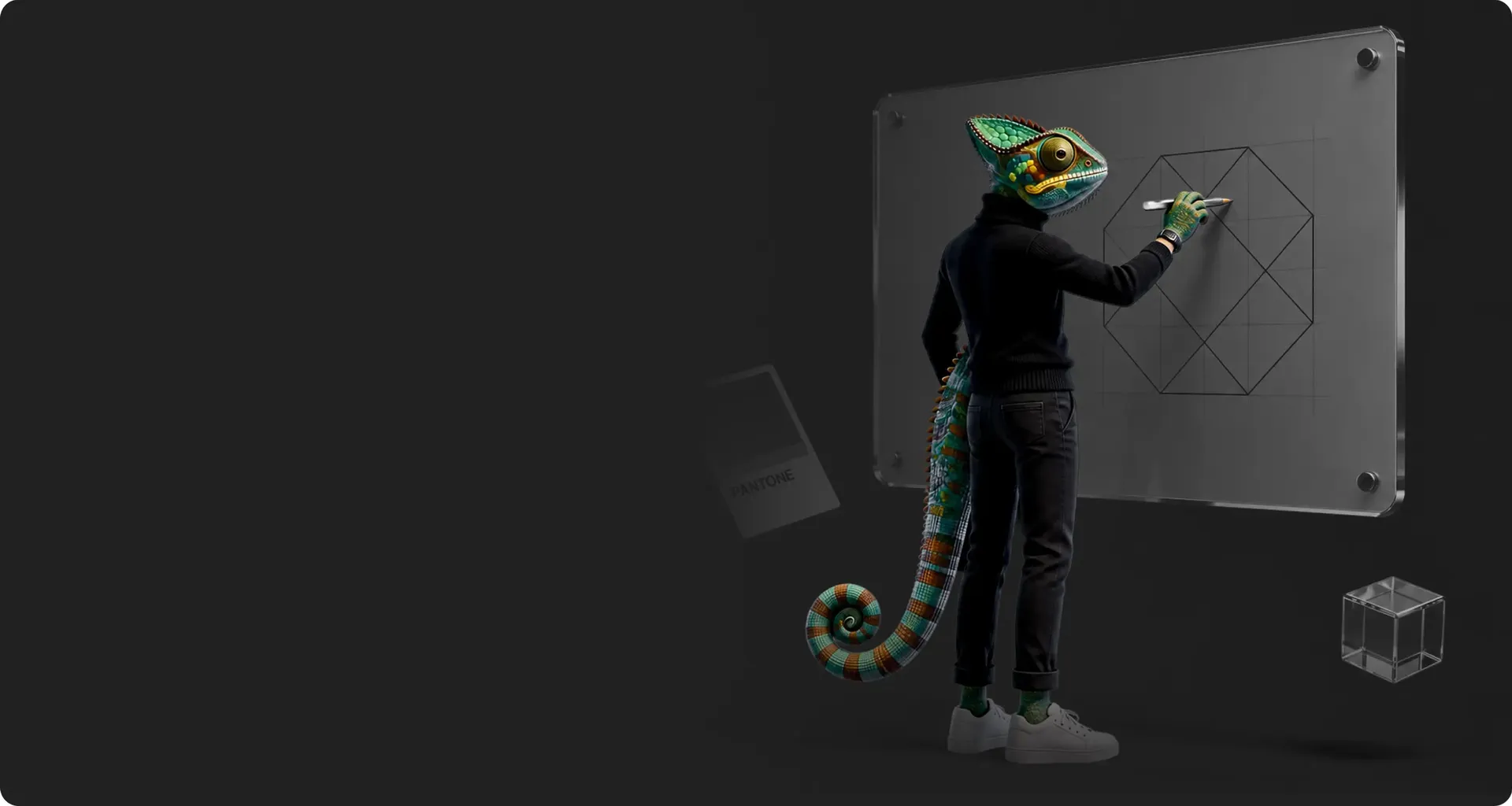
Positioning
One sentence that says who you are there for and why you of all people. Short enough that everyone remembers it.
What brand strategy is
Brand strategy sounds like a workshop and colorful sticky notes. At its core it is something less comfortable: the decision what a company stands for — and what it doesn't. Everything that comes after gets easier for it.
The most common state in mid-sized companies isn't the wrong positioning, it's none at all. The offering grew over the years, every enquiry was accepted, and today you do everything for everyone. That feels safe, and it's the reason price stays the only argument.
Positioning therefore always means giving something up. If you want to be known for one particular thing, you have to let go of other things. That's where projects fail — not the design that follows.
How you notice it's missing: every ad gets debated from scratch. Sales explains something different in every conversation. In pitches, only the price decides. And nobody in the company can say in one sentence why a customer should pick you of all people.
And when you don't need it: if a company does exactly one thing for exactly one group and everyone in the house would say the same about it, the positioning is already there. Then it's only missing on paper, and an afternoon is enough for that instead of a project.

What you end up with
One sentence that says who you are there for and why you of all people. Short enough that everyone remembers it.
Who really buys and who only enquires. Usually there are fewer groups than expected, and different ones.
The three to five statements that should come up again and again. Without them, every department tells a different story.
How you sound, with examples instead of adjectives. A sentence that fits, next to one that doesn't.
If there are several brands or product lines: what stands for what, what belongs under the umbrella, what gets a name of its own.
How we work
Where the brand stands today, what's stuck, who has to sign off in the end. Without that last question it gets tough later.
Conversations with sales, management and, where possible, with customers. The view from outside regularly differs from the self-image, and that gap is exactly the work.
What do the others say, and what do they say it with? Lay all the competitors side by side and the open spots show up quickly.
A day on which decisions get made. We bring proposals instead of pinning up a blank sheet.
The result on a few pages, with examples. Short enough that it gets read, concrete enough that you can work with it afterwards.
Professional Services
Building the company website with a redesign of the logo, a clear brand identity and a well-thought-out UI and UX concept for a modern and intuitive user experience.

Retail & Wholesale
Redesign of an online shop for horse products with a focus on UX, clear product pages and a well-considered site structure for an optimal shopping experience.
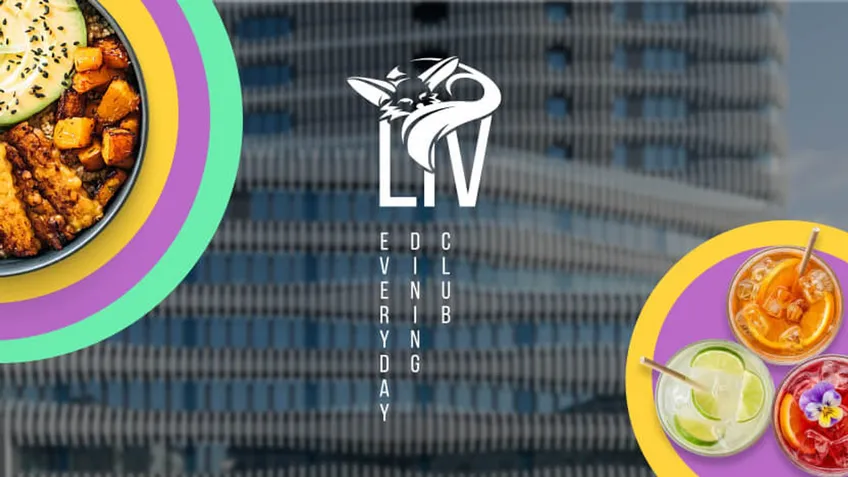
Hospitality & Leisure
The branding for the robot restaurant on the ground floor of the RKM 740 in Düsseldorf-Heerdt covers the logo, color scheme, typography and menu.
What happens next
The most common mistake comes after the workshop. Everyone agrees, the document gets sent around, and three months later everyone works the way they did before. Not out of malice, but because in day-to-day work nobody opens a PDF before approving an ad.
For the decision to hold, it has to become visible. That is the job of branding: positioning turns into color, type and imagery, tone of voice turns into copy. Only then do you notice the strategy without reading it.
That's why we never deliver a strategy without the next step. Sometimes that's a new brand identity, sometimes just a reworked website, sometimes a set of templates for sales. What it becomes is decided at the end of the workshop, not before.
And a note we'd rather give upfront: a positioning doesn't take effect in four weeks. You notice it when conversations get shorter and turn less on price. That takes time — but it's hard to tear down again.
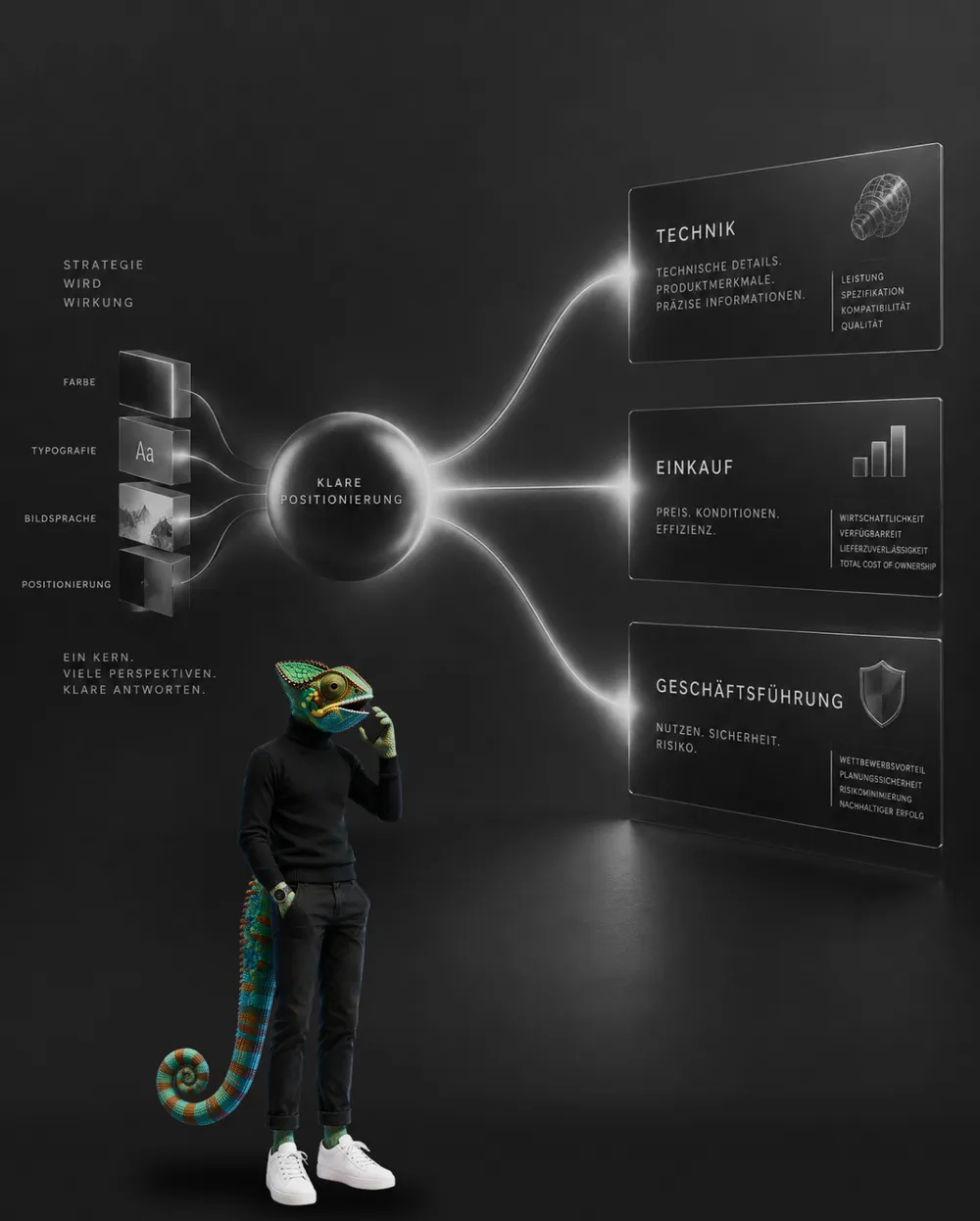
One B2B peculiarity that often gets overlooked: it's rarely one person who decides. A larger purchase is decided by engineering, procurement and management together, and each side asks something different. Engineering wants to know whether it fits, procurement what it costs, management whether the risk is bearable.
A positioning that answers only one of those questions gets stuck in the committee. So we work out the brand messages so that every role finds its answer, without the brand falling apart into three pieces.
Frequently asked
The decision what a company stands for, who it is there for and how it sounds. It sets what belongs to the brand and what doesn't, and makes every later decision about design, copy and campaigns easier.
Positioning, audiences, messages, tone of voice and, if there are several brands, the brand architecture. What doesn't belong to it is the looks: logo, colors and type are brand identity and come afterwards.
The effort depends on how many conversations are needed beforehand and how many brands are in play. A brand workshop with preparation and evaluation starts at around €4,000, a strategy phase with interviews in sales and management usually lands between €8,000 and €15,000. We name the exact range after the intro call. At Laser Me Out three designers had failed before us; a workshop became three moods, and the boldest became the whole brand. For small and medium-sized companies BAFA may fund part of the consulting; whether your company meets the requirements is something you can find out from COZMOO.
The brand is what you stand for. The brand identity is how people see it. The two hang together, but you can have one without the other, and that is exactly where many brand appearances fall apart.
With an umbrella brand, all products run under one name and pay into the same brand. The opposite form is individual brands that stand side by side and have nothing to do with one another. Which form fits depends on whether your audiences are the same.
The pace is set by the interview dates, not by the analysis. If you can get sales and management around one table quickly, you're through that much earlier. We plan the dates in the proposal, conversation by conversation.
Time from the people who have to know: management and sales. And the willingness to give something up in the end. Without that, it stays a description of the status quo.