The short answer
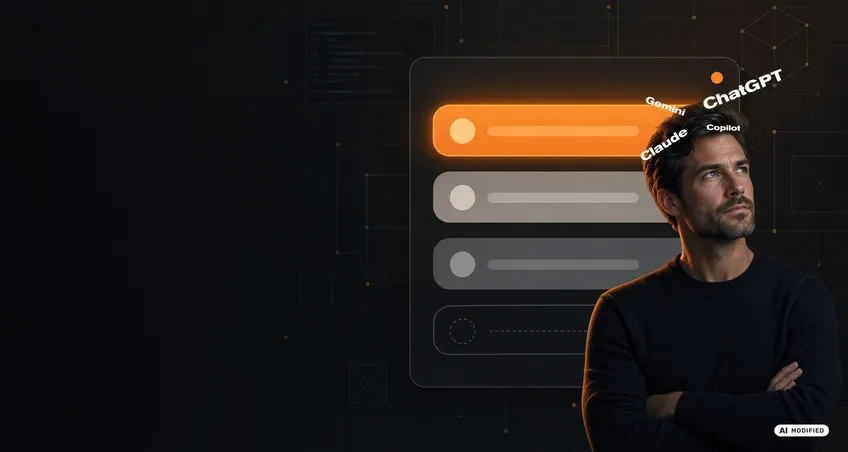
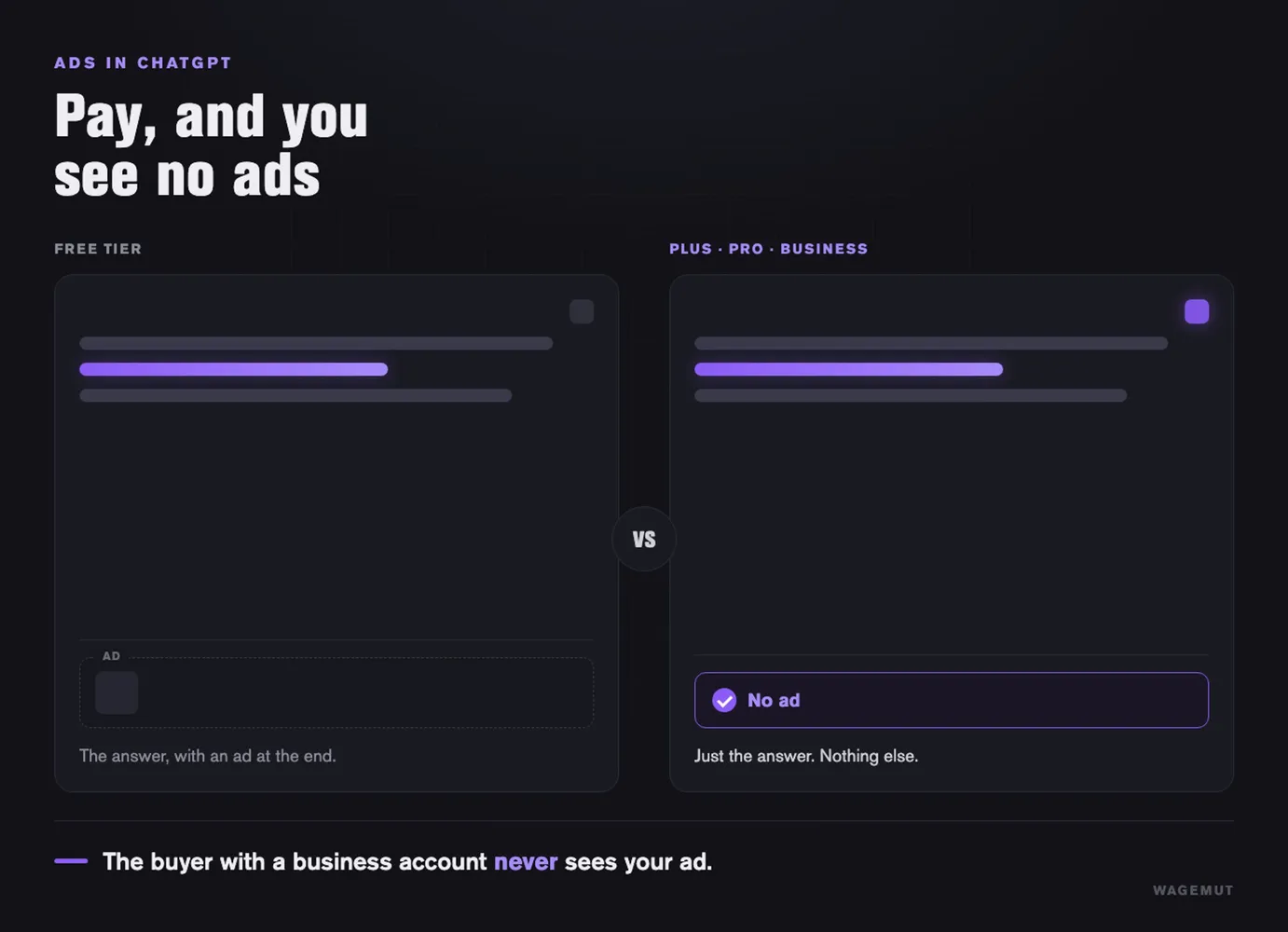
ChatGPT ads have existed since 2026. They appear, labelled, at the end of an answer, and only for users on the free tiers. The answer itself, meaning the names ChatGPT gives when someone asks for suppliers, cannot be bought. Yet that is exactly where it is decided who makes the list. Advertising gets you into the ad slot. You only get into the answer through content, structure and mentions outside your own website.
We are writing this article because a machine builder told us this week that he had started advertising in ChatGPT. It is a smart first step, and still the smaller of two. All information as of October 2026.
What ChatGPT ads are, as of October 2026
OpenAI has been testing ads in ChatGPT since February 2026, first in the US and now in Germany as well. According to OpenAI, the ads appear at the end of an answer when a sponsored product or service fits the conversation. They are labelled as advertising and kept separate from the actual answer.
Two details matter for companies. First, ChatGPT ads only run on the free tiers. Anyone using ChatGPT Plus, Pro or access through their company sees no ads. Second, billing is per click, and since May 2026 there has been an ads manager that lets even small companies book ads themselves. The barrier to entry is low, and that is exactly why many will take this route.
We are this precise because things change quickly. Check the current state directly with OpenAI before you decide.
The difference between the ad slot and the answer
Picture a buyer who needs a packaging machine. He asks ChatGPT: Which manufacturers of tea bag packaging machines are there? What comes back is not a list of ten links but an answer in full sentences. Three or four names, each with a short reason why it is mentioned. And below that, set apart and labelled, possibly an ad.
These are two things on one screen with completely different weight. The buyer reads the answer as information. He reads the ad as advertising. You know this pattern from Google: ads at the top, organic results below, and the majority of clicks have always gone to the organic results. With ChatGPT the difference is even sharper, because the answer does not look like a list of results, it looks like advice.
Then there is the matter of the tiers. Anyone in a company searching for suppliers with ChatGPT usually does so through a paid account. That account never sees the ad. Everyone sees the answer.
Why the answer reads as a recommendation
A search engine shows you what exists. An AI assistant tells you what fits. That is the difference in one sentence, and it explains why the answer carries so much weight.
The answer carries no label, it names a few companies instead of many, and it gives reasons for its choice. That is the format of a recommendation between colleagues, not of an ad. Whoever appears there is on the list the buyer takes into the next meeting. Whoever does not appear there is not in eleventh place. He is simply not there. AI assistants' answers have no page two.
Why the answer cannot be bought
OpenAI has promised that advertising does not influence the answers. Ads are a separate block, the answer is generated independently. Whether that will still hold in five years, nobody knows. Today it does, and you have to plan for it.
So how is the answer generated? The assistant draws on what it finds about suppliers and considers reliable: websites with a clear structure and verifiable facts, trade articles, industry directories, press, mentions by third parties. It prefers companies whose information is complete, consistent and confirmed by several sources. Anyone who does not appear in these sources, or only with a brochure, does not make it into the answer. No budget changes that.
That is the real message of this article: You can buy the ad. You have to earn the answer.
When ChatGPT ads still make sense
We are not against ads, and it would be dishonest to pretend otherwise. For consumer products, for new brands, for quick reach among private users on the free tiers, ChatGPT ads can become a good channel, especially in the test phase while prices are low.
For B2B suppliers with long buying processes and buyers on paid accounts, they are the smaller lever. They can complement the organic work. They cannot replace it, because they never reach the decisive slot.
What you can do instead: three levers
Content that answers questions. Not what your company can do, but what a buyer wants to know before drawing up a list: applications, limits, comparisons, figures. An assistant quotes pages that answer a question completely, not pages that string keywords together.
A structure a machine can read. Every service, every product on its own page, with clear facts, consistent details and structured data. A page that stands on its own can be quoted. A brochure in ten sections cannot.
Mentions outside your own website. Trade press, directories, partner sites, customer testimonials, trade fair reports. An assistant trusts what several sources confirm. Anyone who only talks about themselves on their own site is a claim to it, not a fact.
Loading speed, security and mobile display are a must. But they do not get you into the answer. Technology is a must, not the lever.
Three examples from our work
The machine builder who now advertises in ChatGPT has recognised something most of his competitors do not see yet: His customers ask the AI. That is more than 95 percent of his industry has grasped. The next step is to take the slot next to it.
A specialist machine builder from the Rhineland, a leader in his segment, had us check this autumn how he shows up in the answers. Three assistants, the same question about manufacturers in his product category. Result: exactly one mention. World-class product, invisible in the answer.
And an international cosmetics group found us through Claude, not through Google and not through a referral. Without a single ad. It is the same mechanism, just from the other side.
How far this goes when you take it seriously over years is shown by our work for YASDA: plus 200 percent revenue in Europe since 2020, with website, content and trade fairs as one system.
Want to know where your company stands today?
We check for you whether ChatGPT, Gemini and Claude name your company when someone asks about your product category. Three assistants, several phrasings, with a written evaluation and concrete recommendations. It takes 30 minutes and costs you nothing. Book your free check.